We do more than tackle fires and rescue people. Catch up with all the latest that we have been involved in.
Incidents, News & EventsWe’re committed to keeping our communities safe, well and informed and our prevention and protection work plays a large role in this.
SafetyHow to keep yourself, your family and friends safe with fire safety advice
Young People & SchoolsBehind every firefighter there are specialist support teams all playing their part, helping to save lives
CareersIf you need to get in touch or find a form. Remember phone 999 if it is an emergency.
How to contact us
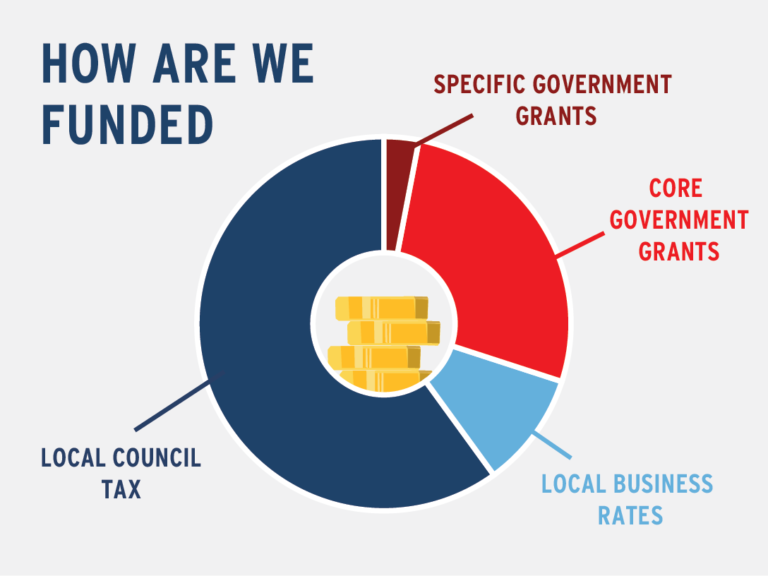
We receive funding each year from three main funding streams:
There are also financial reserves which are essentially a ‘savings pot’ that helps us to pay for specific projects such as investment in our buildings or IT infrastructure.
The Service also generates income in areas such as partnership working and by earning interest on cash balances we hold prior to incurring expenditure.
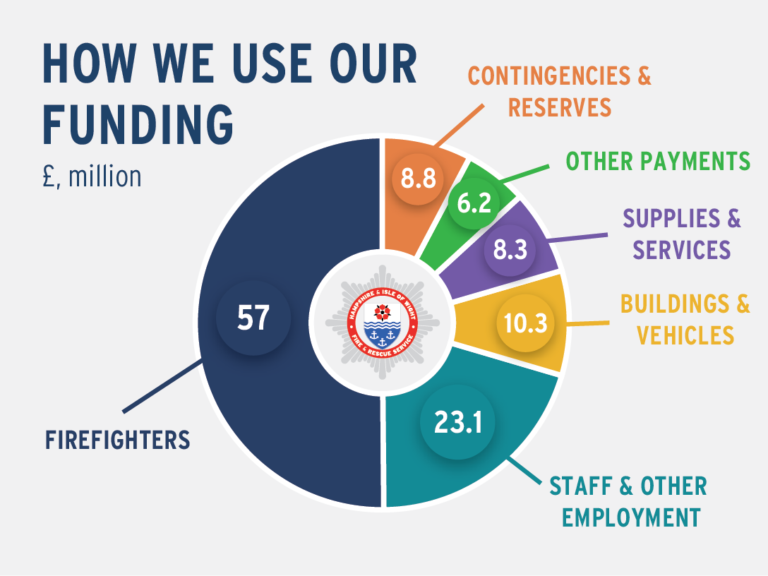
We use our funding to pay for our firefighters and support staff, essential firefighting vehicles and equipment, the upkeep of stations and training facilities, plus our day-to-day expenses such as fuel, heat and light, and IT.
Council tax is our largest source of funding. In 2024/25 it made up about 59% of our total funding and this proportion is increasing as government funding falls.
Council tax decisions are made locally by the Fire Authority within the limits set by the government.
In November 2025 the Government gave Fire Authorities the flexibility to raise council tax £5 a year (or 42p a month) for an average band D household without a local referendum. The government has granted this flexibility for the next three years and assumes Fire Authorities will increase council tax by this amount when assessing what other funding to allocate. A referendum would be costly to administer so the referendum threshold is in effect a cap on how much council tax can be raised.
Even with this increase, our council tax remains one of the lowest of any fire authority in England. Three‑quarters of local households would still pay less than £8 per month towards the cost of the fire and rescue service.
For information on council tax bands and charges visit our council tax page
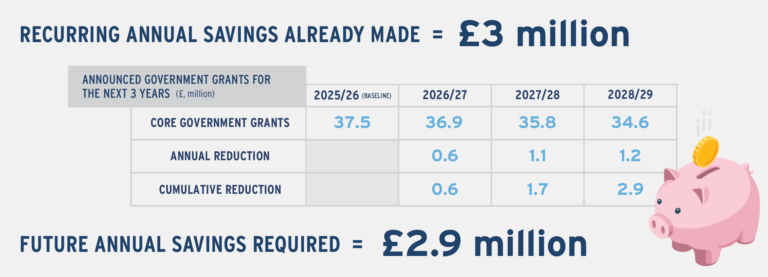
Government grants and business rates made up about 38% of our total funding in 2024/25. This is expected to reduce, and under the provisional settlement our core funding allocation will fall by £2.9 million over the next three years.
The funding allocation is complex and includes business rates because of the way business rates are set and allocated. It estimates differences in the need to spend on fire and rescue services in different parts of the country based on factors such as population, coastline, and control of major accident hazards risk sites. It also makes assumptions about how much council tax can be generated by each fire and rescue authority.
The Government has recently committed to review this fire funding formula. While we agreed a review is needed, this will not change the total amount of funding available to the fire and rescue sector. Any changes to the formula would see ‘winners and losers’ nationally; with some fire services allocated a higher portion of funding than now and, others less.
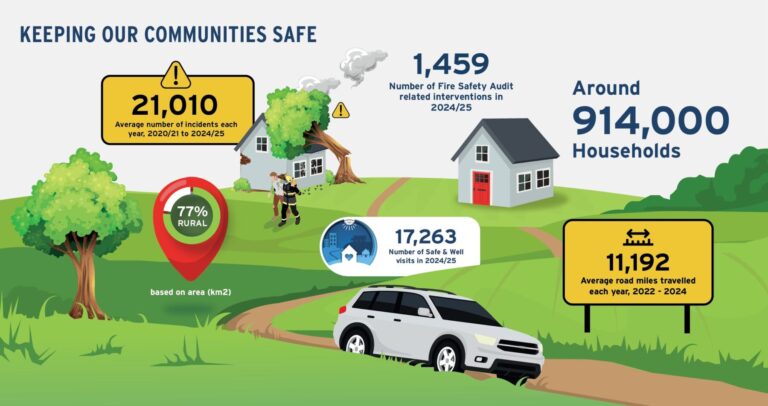
For an area like Hampshire and the Isle of Wight – where we have a wide range of geographical areas and different risks in each, from dense urban cities and rural farmland, to coastlines, the most highly populated island in the UK, two National Parks and the 2nd largest container port and the largest petrochemical complex in the UK’ – it is hard to assess what the formula changes could mean for us.
Fire services across the country take on specialisms that can then be used to support other fire services when they need specialist support such as Urban Search and Rescue. Because there is a national benefit to having these capabilities, they can attract specific Government grants for the bespoke training and equipment they require.
We have specialist teams that are capable of dealing with all types of emergencies and we are committed to supporting large scale incidents. These teams have been deployed both nationally and to international disasters.
When talking about local services and their funding, Government often refer to a measure called Core Spending Power. This is essentially all the main pots of funding added together. In 2025/26 we saw a 3.7% increase in Core Sending Power (approximately £3.4m), but this was made up of an increase of around £4m from council tax combined with a reduction of around £0.6m from central Government funding.
The Government recently pledged that if fire services raise their council tax element by the maximum of £5 (Band D), they will receive real terms protection in terms of core spending power. This means Core Spending Power will not go down after allowing for the impact of inflation. Provisionally, our CSP is due to go up by between 3.1% and 3.7% annually through the settlement period, above CPI inflation forecasts for the period. While this sounds positive on the surface, this does not tell the whole story.
This is because the vast majority of our funding comes from the sources covered by the Core Spending Power calculation. Maintaining or increasing CSP by a relatively small amount in real terms means that to fund changing requirements and demands and to make investment in improving services to our communities, we need to reduce expenditure on things we already do. We also have pressures to meet if we have to fund any above inflation cost increases that we face, which can be the case.
In addition, we continue to receive no funding from government to pay for investment in the capital assets we need to deliver services, like vehicles and fire stations so we use reserves to finance these projects.
Reserves are money set aside to pay for future, special, or unexpected costs, they work the same way as a household’s savings.
You may have different savings pots, for example to save for a new kitchen, help fund a child’s university costs or to cover off any emergencies, we also split our reserves into different pots to manage risks and fund needed investment to keep the service running effectively.
Reserves cannot be used to fund ongoing costs because just like a household’s savings they can only be spent once.
We can use reserves to buy us time to find a long-term sustainable solution to funding the budget gap, such as reducing costs by changing the way we do things to be more efficient. Doing this means our reserves reduce and therefore so does our financial safety net and ability to fund large projects, such as station improvements, or to meet new demands.

Hampshire and Isle of Wight Fire and Rescue Service is dedicated to making life safer. Our firefighters respond to fires and road traffic collisions, but also to building collapses, water rescues, animal rescues, chemical incidents, and provide support partners with various other emergencies, including medical response.
The services we provide are becoming more expensive to deliver, and demand for them is changing too due to climate change and emerging risks such as lithium-ion batteries.
Climate change is a big challenge for us, the weather affects how busy we are. For example:
People are living longer, there are 26,000 more over 65s than four years ago, and this can affect how busy we are, for example increasing the help we give the ambulance service with medical emergencies or assisting partners with gaining entry or exit to a building. It also increases the demand on our prevention services as older people, those with mental or physical health conditions can be more at greater risk of fire.
We also need to ensure we comply with new legislation when it is introduced and to implement recommendations from the Grenfell Tower and Manchester Arena Inquiries.
We have to cover the impact of inflation on pay and non-pay costs and also find ways to pay for any changes in the way we deliver our services to meet our Safety Plan objectives and keep the communities of Hampshire and Isle of Wight safe.
Despite delivering more than £3m in efficiencies—around 3% of our annual budget—we are still forecasting a budget gap for 2026/27 and beyond. We can temporarily balance the 2026/27 budget using one‑off mitigations, but these are not long‑term solutions.
Our challenge is to find sustainable ways to close future budget gaps while protecting the services our communities rely on and delivering our Safety Plan objectives.