
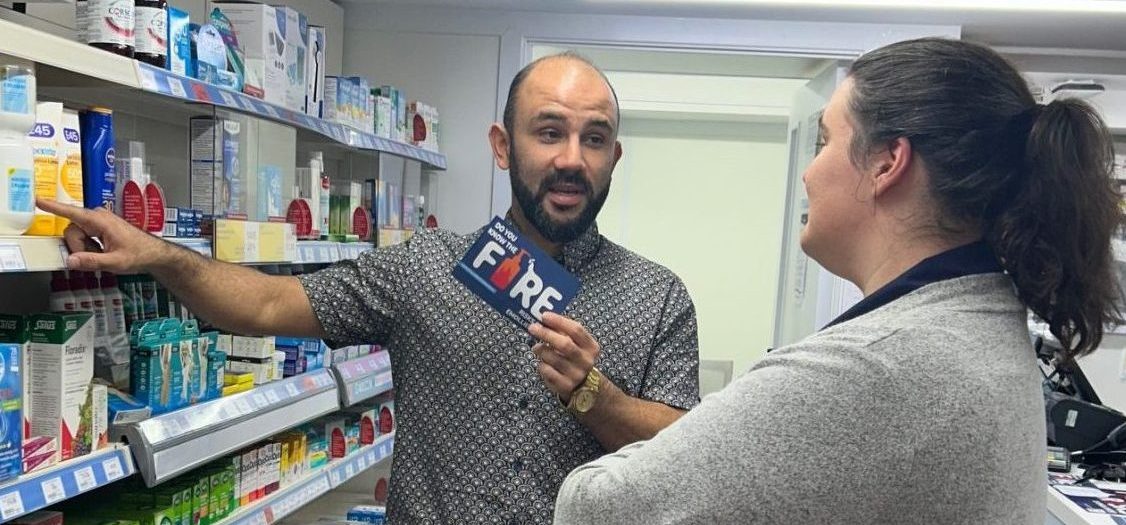
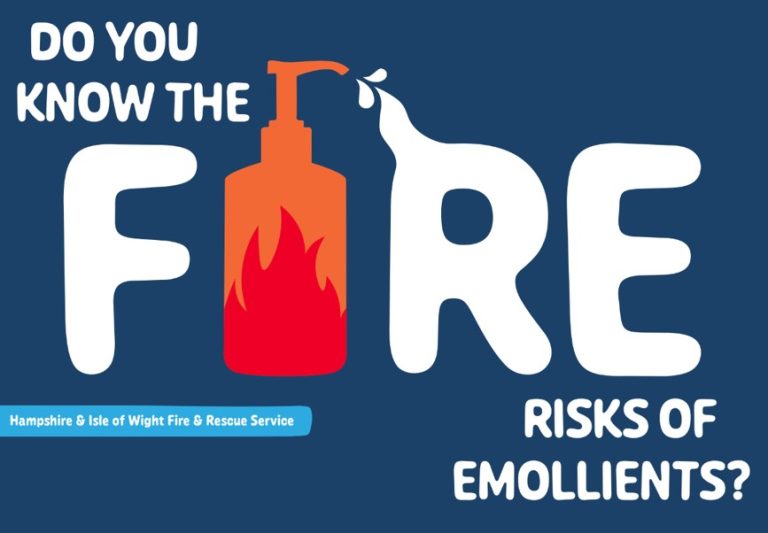
Hampshire and Isle of Wight Fire and Rescue Service (HIWFRS) has once again joined forces with NHS Hampshire and Isle of Wight and Community Pharmacy Hampshire & Isle of Wight to raise awareness of the fire risks associated with emollient creams.
The campaign builds on a successful joint initiative delivered in 2024, which saw fire safety resources distributed to hundreds of pharmacies, GP surgeries and care providers across Hampshire and the Isle of Wight.
Emollients are creams, lotions, sprays and ointments used to treat a range of skin conditions. While they provide important health benefits, both paraffin and non-paraffin emollients can increase the risk of fire when they build up on clothing, bedding, dressings and other fabrics. These materials can then ignite more easily and burn more intensely when exposed to naked flames or other heat sources. The importance of this safety message is reflected in local incident data, with seven incidents across Hampshire and the Isle of Wight in the past four years resulting in serious injuries or fatalities.
The National Fire Chiefs Council (NFCC) is aware of 56 deaths nationally in England since 2010 where emollients were confirmed to have been involved. This highlights the need for continued awareness of the risks and the simple precautions that can help keep people safe.
Thanks to funding from 3SFire Community Interest Company, an increased number of campaign resources will be distributed this year, helping to reach more emollient users, carers, healthcare professionals and support workers across Hampshire and the Isle of Wight.
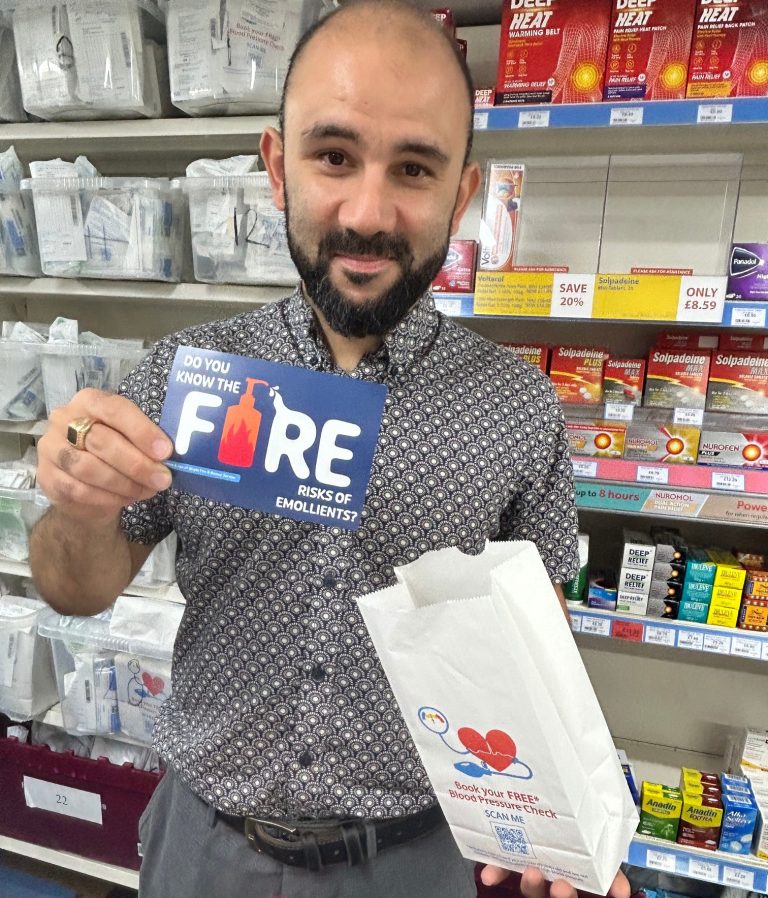
Posters, postcards and digital resources are being shared through pharmacies, GP surgeries and partner organisations to ensure vital safety information reaches those most at risk.
Reduce the risks for yourself or someone you know
If you or someone you care for uses emollient creams:
- Never smoke in bed.
- Take extra care around naked flames and heat sources.
- Avoid sitting too close to open fires, gas fires or halogen heaters.
- Be cautious when cooking, particularly around gas hobs.
- Wash clothing, bedding and dressings regularly at the highest temperature recommended by the manufacturer. Washing can reduce the build-up of emollients but does not remove the risk completely.
- Ensure smoke alarms are fitted, working and tested regularly.
HIWFRS Assistant Director for Community Safety, James Lucy said:
“Many people are unaware that both paraffin and non-paraffin emollients can increase fire risk when they build up on clothing, bedding, and dressings. Tragically, several serious and fatal fires have been linked to emollient use, both locally and nationally. This is why it is so important to raise awareness of the risks and how to reduce them.”
“Following the success of our 2024 campaign, we’re delighted to be working alongside our health partners once again to share this important safety advice. Thanks to funding from 3SFire CIC, we’re able to distribute even more resources this year, helping us reach more residents, carers and healthcare professionals across Hampshire and the Isle of Wight.
We want everyone who uses emollients, as well as those who support them, to understand the risks and the simple precautions they can take to stay safe. By improving awareness, we can help people make informed choices that protect themselves and their loved ones.”
Alison Freemantle, Joint Chief Officer at Community Pharmacy Hampshire & Isle of Wight said:
“Many people obtain emollients and creams from community pharmacies whether it’s when collecting a prescription or buying them. It is important people are aware of risks and how to minimise them and pharmacies are in an ideal position to help spread this message to the public.”
Neil Hardy, Chief Pharmacist at NHS Hampshire and Isle of Wight ICB, said:
“We are really pleased to partner with the fire service and offer our support for this important message to help inform our patients and prevent any potential future tragedies.”
For more information about emollient fire safety, visit https://bit.ly/Emollients2026
